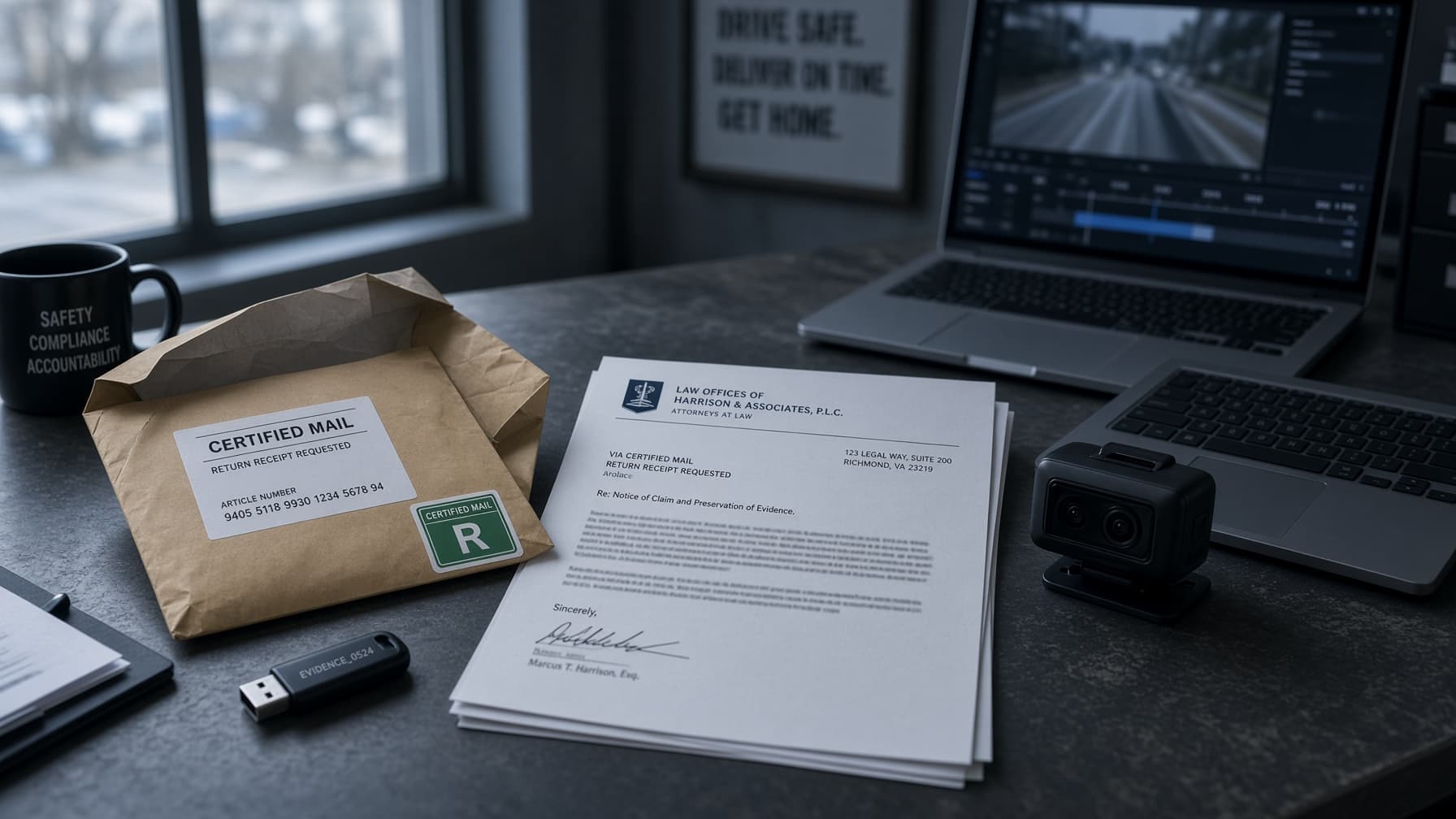
After a serious crash, the first formal contact from the other side is often a preservation letter, sometimes called a spoliation letter. It arrives before any lawsuit and demands that you keep every piece of evidence connected to the crash.
This is general information, not legal advice. When you receive one, call your insurer and defense counsel the same day.
Why this letter matters so much
Once you're on notice of a likely claim, you have a duty to preserve relevant evidence. Losing or destroying it after that point is spoliation.
Courts can respond to spoliation in several ways. The one that hurts most is an adverse inference instruction, where the jury is told it may assume the missing evidence would have been bad for you. Some courts can go further, with sanctions or by excluding parts of your defense.
The unfortunate part is that most spoliation isn't deliberate. It's a system that deletes data on schedule while nobody tells it to stop.
Your duty may start before the letter arrives. A serious crash can put you on notice by itself. The letter just removes any doubt.
What the letter typically demands
Plaintiff firms use long, broad templates. Expect some version of all of these:
- Dash cam and video. Forward and driver-facing footage, including clips that weren't flagged as events.
- Engine control module (ECM) data. Speed, braking, throttle and fault codes around the crash.
- Telematics and GPS. Location, speed and harsh-event data.
- ELD and hours-of-service records. Usually for a period before the crash, not just the day of it.
- The truck and trailer themselves, in their post-crash condition.
- Maintenance, inspection and DVIR records.
- The driver qualification file, training records and drug and alcohol testing records.
- Dispatch communications, texts, messaging-platform history and the driver's phone records.
- Your internal accident reports and photos.
The data that deletes itself
This is where carriers get hurt. Several of these sources overwrite automatically:
- Dash cams often keep continuous footage on a loop and keep only flagged clips. The minutes before a crash that nobody flagged can be gone within days.
- ECM event data can be overwritten by later hard-braking events or by simply driving the truck.
- Telematics platforms apply retention periods that vary by vendor and plan.
- ELD records only have to be kept for six months under the regulations, so routine deletion is normal and has to be stopped.
- DVIRs only have to be kept for three months.
- Text messages and dispatch chats get deleted by phone settings and app retention policies.
Same-day checklist
- Call your insurer and defense counsel. Forward the letter. Let counsel decide what's in scope and how to respond.
- Issue a written litigation hold to everyone who touches relevant records: safety, dispatch, maintenance, HR and IT. Say what to keep and that routine deletion is suspended.
- Pull and secure the video. Download it from the camera platform, including footage outside the flagged clip, and store it somewhere it can't be overwritten.
- Take the truck out of service until counsel agrees on how to handle it. Don't repair it and don't download the ECM yourself without agreement. Counsel may want a joint download with the other side's expert present, so nobody can later claim the data was altered.
- Tell your vendors. Ask your telematics, ELD and camera providers in writing to preserve the data for that unit and driver.
- Preserve communications, including the driver's phone if it's company-issued, and dispatch chat history.
- Lock down the paper records: the DQ file, maintenance and inspection records, testing records and the accident register entry.
- Keep a log of what you preserved, when and by whom. That record is your answer if anyone later accuses you of losing something.
What not to do
- Don't ignore the letter because a lawsuit hasn't been filed.
- Don't clean up records, even innocently. Filling in a missing signature after the fact is worse than the missing signature.
- Don't let the driver keep driving the truck if its ECM holds crash data.
- Don't discuss the crash in texts, group chats or on social media.
Get ready before you need it
A carrier that already knows where every record lives, and how to stop deletion in an hour, has a completely different case from one that finds out after three weeks.
- Know the retention period on every system you use, and whether you can extend it.
- Have a litigation hold template ready.
- Pick one person who owns preservation after a crash.
- Keep records organized all the time, not just when it matters. See the documents you'll need if you're sued.
Evidence you kept is also evidence that helps you. Video from a dash cam can clear a driver outright, and a clean, complete file makes the safety director's deposition far easier. Records are the core of any defense against a nuclear verdict.
Quick answers
What is a preservation letter? A letter from a claimant's attorney, usually sent before a lawsuit, demanding that you keep all evidence related to the crash.
What is spoliation? Losing, altering or destroying relevant evidence after you had a duty to preserve it.
What happens if I lose evidence after getting the letter? A court can tell the jury to assume the evidence would have hurt you, or impose other sanctions.
Should I download the ECM myself? Not without counsel's agreement. A joint download avoids arguments that the data was altered.
Sources
- eCFR: 49 CFR 395.8, Driver's record of duty status (retention)
- eCFR: 49 CFR 396.11, Driver vehicle inspection reports
- eCFR: 49 CFR 390.15, Assistance in investigations and special studies (accident register)
- Federal Rules of Civil Procedure: Rule 37(e), Failure to preserve electronically stored information