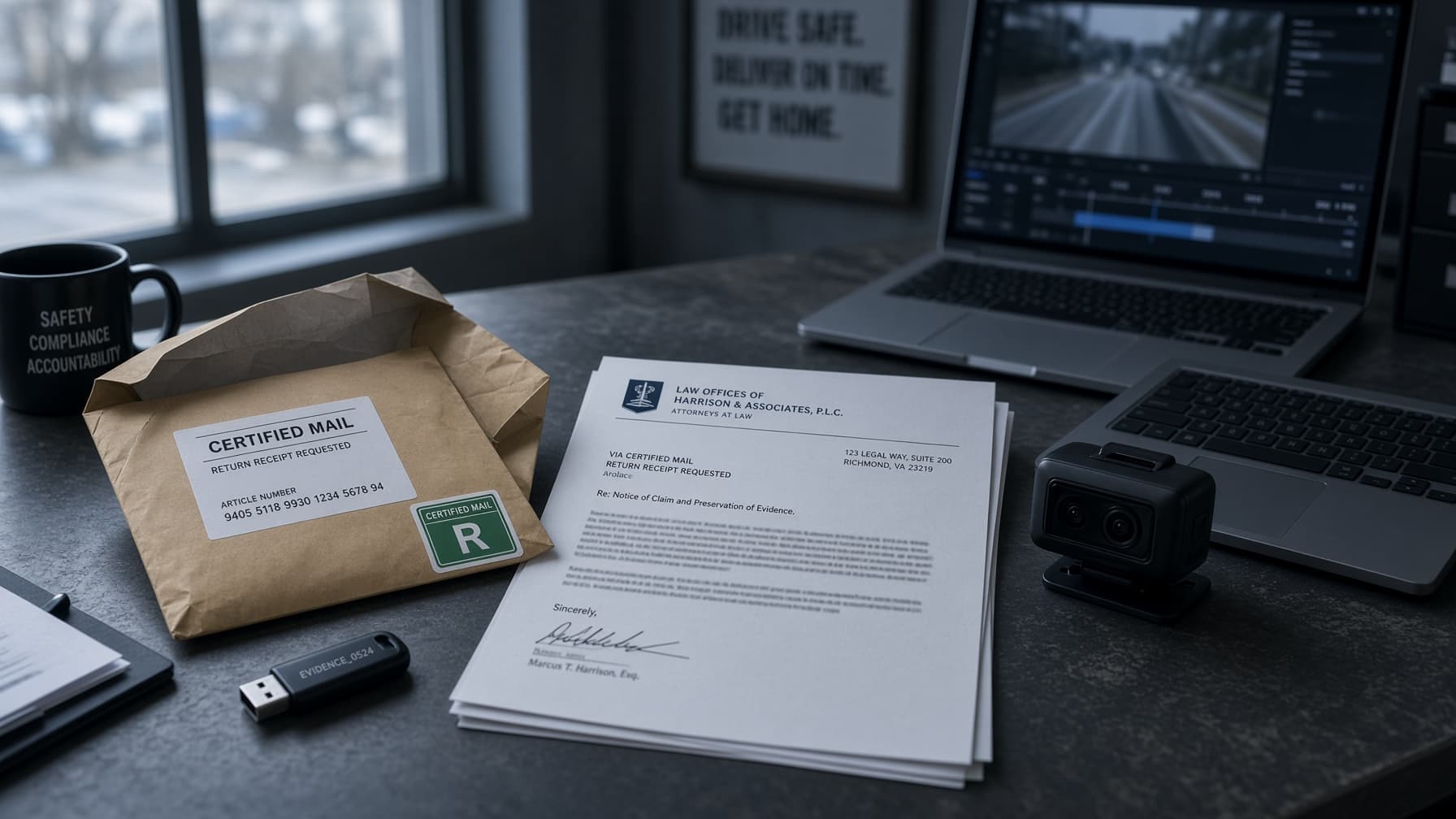

Getting sued is one of the most stressful things that can happen to a carrier — and plaintiff's attorneys count on that panic. The good news: if your records are complete and you move quickly, most cases are far more defensible than that first summons makes them feel. This is a practical checklist, not legal advice — your attorney drives strategy — but knowing what they'll ask for lets you hand it over in hours instead of weeks.
The first 72 hours matter most
The moment you're on notice of a claim, you have a legal duty to preserve evidence — a "litigation hold." Deleting, overwriting, or losing records after that point (dashcam footage that auto-purges, ELD data, texts) can be treated as spoliation, and a judge can instruct the jury to assume the missing evidence was bad for you. So step one is simple: stop the clock on anything that auto-deletes and preserve everything tied to the driver, the truck, and the trip.
The documents your attorney will need
Across almost every trucking case, the defense file comes down to the same core records. Have these ready:
- Driver Qualification file — application, MVRs, annual review, road test, and the driver's CDL and current DOT medical certificate.
- Hours-of-Service / ELD logs for the days around the incident, showing the driver was legal and rested.
- Training records — every course the driver completed, with dates and scores, proving they were trained on the relevant skill.
- Vehicle maintenance and inspection history for the truck and trailer — DVIRs, scheduled maintenance, and the last annual inspection.
- The accident record itself — your internal report, photos, the police report, witness info, and any dashcam or telematics data.
- Drug and alcohol testing records, including any post-accident test.
- Dispatch and trip records, plus the driver's employment and disciplinary history.
Notice the pattern: the plaintiff's theory is almost always "negligent hiring, training, or retention" — that you should have known this driver or truck was unsafe. Every document above is you answering that with evidence.
Why speed is a strategic advantage
Discovery deadlines are unforgiving, and a defense attorney who gets a complete, organized file on day one can shape the case early — sometimes getting it dismissed or settled cheaply before it ever builds momentum. A carrier who takes three weeks to dig records out of filing cabinets and email threads hands the other side time and leverage.
Turn weeks of digging into minutes
The fix is to keep every driver file, training record, inspection, and incident report in one place, timestamped, as part of normal operations. Then when a summons hits, you can pull everything tied to that accident into a single organized file your attorney can open immediately. Served on Friday? Your lawyer should have the full file by Monday.
You can't control when you get sued. You can control whether your records are ready when it happens.
Common questions after a truck accident lawsuit
What documents do you need when your trucking company gets sued? At minimum: the driver qualification file, HOS/ELD logs, training records, vehicle maintenance and inspection history, the accident report and photos, drug and alcohol testing results, and dispatch records — the core of any commercial truck accident defense file.
How fast do I have to respond to a trucking lawsuit? A summons has a strict answer deadline (often around 20–30 days depending on the state and court), so contact your insurer and defense attorney immediately and put a litigation hold on all evidence the same day.
Can small carriers and owner-operators be hit with a nuclear verdict? Yes. Nuclear verdicts against motor carriers aren't limited to mega-fleets — strong, organized documentation is the single best protection for a small trucking company facing a negligence lawsuit.