
A DOT medical certificate can last up to two years. For a lot of drivers, the number that decides whether they get two years, one year or three months is their blood pressure.
This is general information, not medical advice. The certified medical examiner makes the decision, and they can use judgement in individual cases.
What the regulation says
The rule itself is short. Under 49 CFR 391.41(b)(6), a driver is physically qualified only if they have no current clinical diagnosis of high blood pressure likely to interfere with their ability to operate a commercial motor vehicle safely.
There are no numbers in the regulation. The numbers come from FMCSA's cardiovascular guidance to examiners, which is reflected in the agency's Medical Examiner's Handbook, and they're applied very consistently.
The thresholds examiners use
| Reading | What typically happens |
|---|---|
| Below 140/90 | Normal certification, up to 2 years |
| 140–159 / 90–99 (Stage 1) | Certified for 1 year. Recheck annually, and future readings should be at or below 140/90 |
| 160–179 / 100–109 (Stage 2) | A one-time 3-month certificate to get the pressure down. At 140/90 or below within that window, certified for 1 year from the original exam date |
| 180 / 110 or higher (Stage 3) | Not certified until reduced to 140/90 or below. Then usually certified in 6-month intervals |
The rule that catches people out: systolic "or" diastolic. A reading of 138/96 is Stage 1 because of the bottom number, even though the top one is fine.
Medication is not a disqualifier
Drivers can be certified while taking blood pressure medication. Controlled hypertension is a normal, certifiable condition. Examiners will want to know that the treatment is working and that the medication doesn't cause side effects, such as dizziness, that affect driving.
Bring the list of medications and doses. Don't stop taking a medication before an exam to "see what happens". Rebound blood pressure is real, and it's the worst possible timing.
White coat readings
Plenty of drivers read higher in a clinic than at home. Examiners know this, and many will retake the reading later in the exam once you've had time to sit calmly.
What helps:
- Arrive early and sit quietly for a few minutes before the reading.
- Avoid caffeine, nicotine and energy drinks for several hours beforehand.
- Don't come straight off a long shift or a stressful drive.
- Bring a log of home readings taken with a validated cuff over the previous few weeks. It won't replace the exam reading, but it gives context.
The long-term fix
A short card isn't just an inconvenience. More frequent exams mean more chances of a gap, and since certification now files electronically and can quietly downgrade a CDL when something goes wrong, every extra renewal is an extra risk.
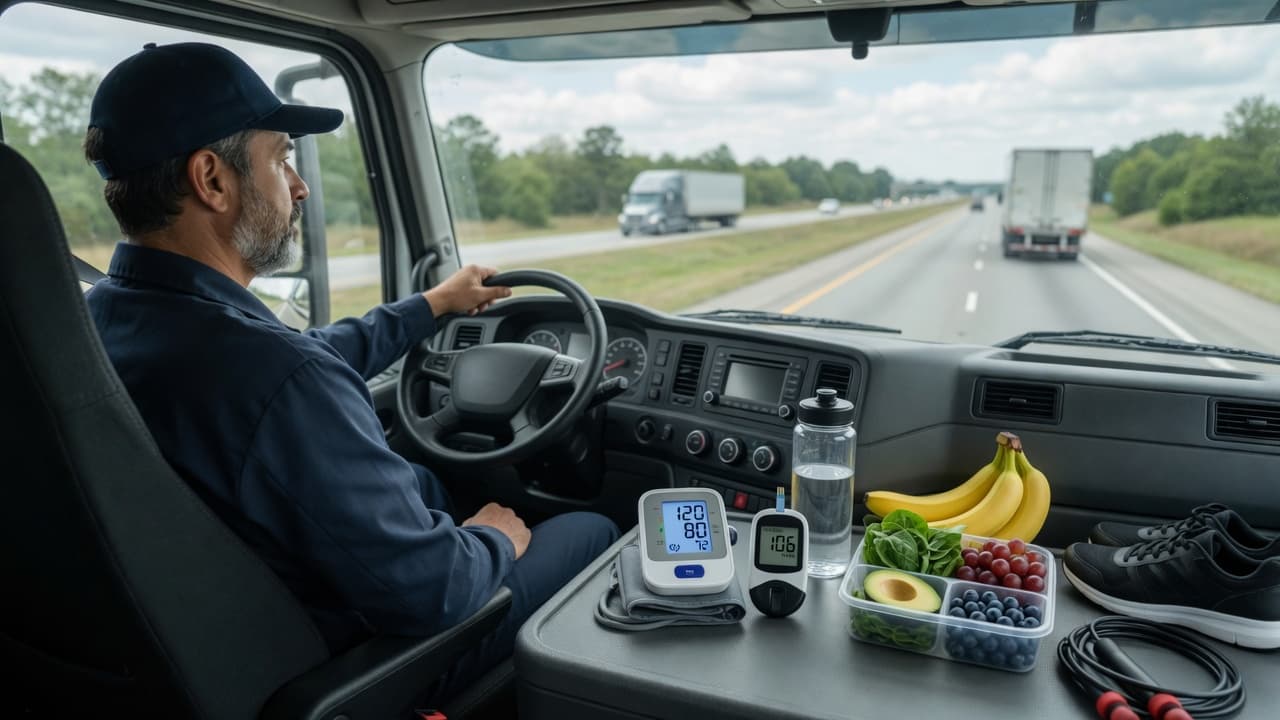
What moves blood pressure for most drivers is unglamorous: less sodium from truck-stop food, more movement, better sleep, less alcohol, and taking prescribed medication every day. We cover the practical side of that in CMV driver health tips.
Check for sleep apnea. Untreated obstructive sleep apnea is closely linked to high blood pressure, and treating it often brings blood pressure down. See sleep apnea and the DOT physical.
For fleets
- Track certification expiry dates and flag every driver on a one-year or shorter card.
- Book renewals early so a Stage 2 reading doesn't turn into a gap in qualification.
- Consider paying for blood pressure screening or wellness checks. A driver who finds out at a free screening in March doesn't find out at a DOT physical in April.
- Keep the current certificate in the driver qualification file, and confirm it has posted to the state record.
Quick answers
What blood pressure do I need to pass a DOT physical? Below 140/90 typically qualifies for a full two-year card. Readings up to 159/99 usually get a one-year card.
Can I pass the DOT physical on blood pressure medication? Yes, if the blood pressure is controlled and the medication doesn't cause side effects that affect safe driving.
What happens if my blood pressure is 160/100 or higher? Typically a one-time three-month certificate to bring it to 140/90 or below. At 180/110 or above, you won't be certified until it's controlled.
Can the examiner retake my blood pressure? Many examiners will, particularly if the first reading looks like white coat hypertension.