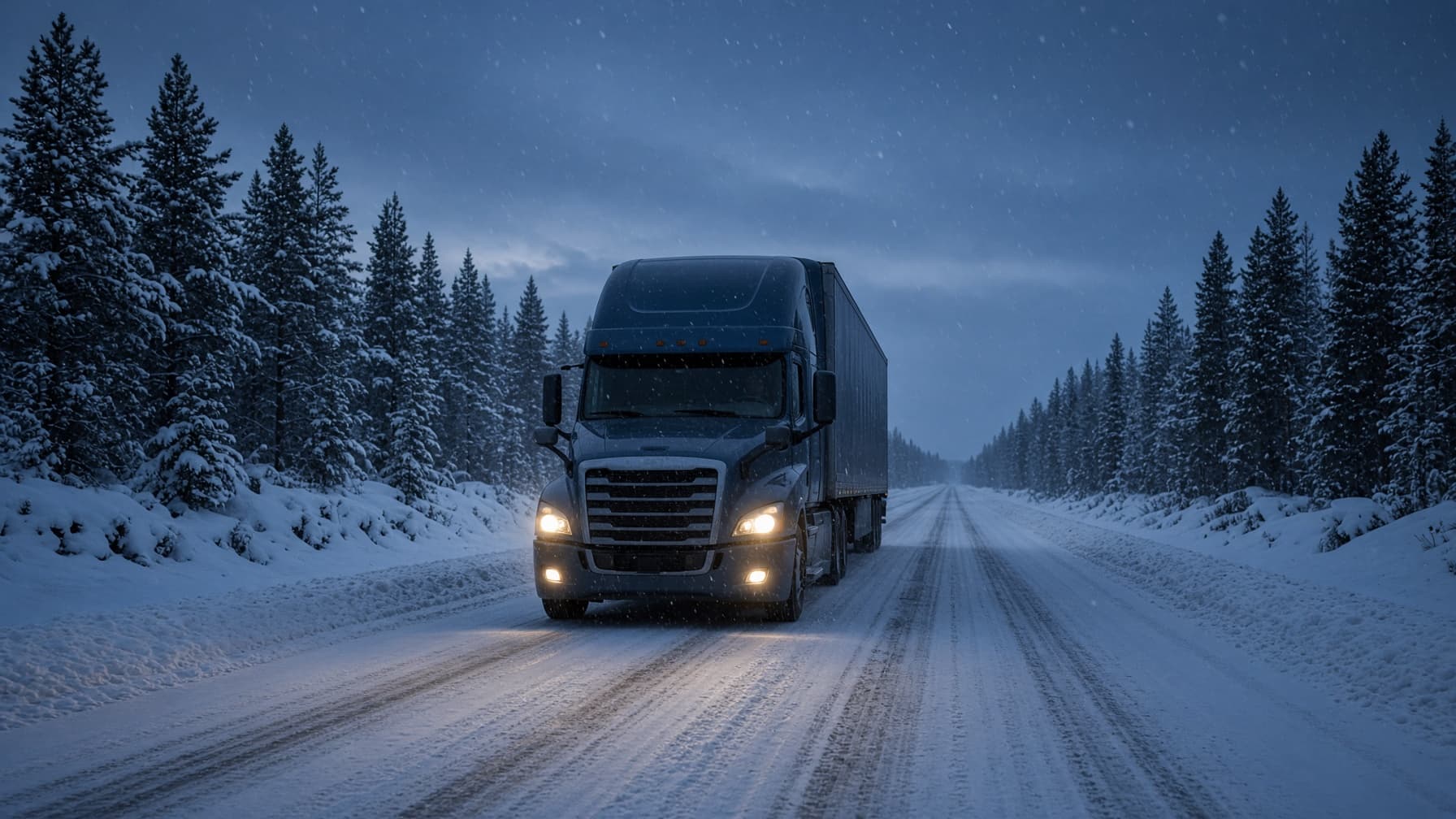
Winter crashes rarely come out of nowhere. They're usually the end of a chain that started weeks earlier: tires that were close to the limit in October, an air dryer nobody serviced, a new driver from a warm-weather state who has never seen black ice, or a dispatch culture where stopping for weather feels like letting the team down. Break the chain in the fall and most of those crashes never happen.
This checklist is general safety guidance, not legal advice. Your maintenance provider, insurer and safety consultant should tailor it to your routes and equipment.
Get the trucks ready
Schedule a winter inspection for every power unit and trailer before the first freeze, and give your technicians a list that goes beyond the standard PM:
- Tires. Federal rules set minimum tread depth at 4/32 of an inch on steer tires and 2/32 on all other tires, but those are legal minimums, not winter targets. Replace tires that will be near the limit by midwinter, check pressures often as temperatures drop, and look for cuts and sidewall damage.
- Batteries, starters and block heaters. Cold weather exposes weak batteries fast. Load-test them, and make sure block heaters and cords work before the first cold morning.
- Air brakes. Moisture in the air system freezes. Service the air dryer, have drivers drain air tanks daily, and check brake adjustment. Ice is the worst place to discover an out-of-adjustment brake.
- Fuel. Diesel gels in extreme cold. Use winter-blend fuel or an anti-gel additive for your routes, change fuel filters, drain water separators, and keep tanks fuller to cut down on condensation.
- Visibility. Wipers and defrosters are required safety equipment, not comfort items. Use washer fluid rated for freezing temperatures, and keep lights and reflective tape clean, because road spray covers both within miles.
- Coolant, belts and hoses. Test antifreeze protection levels, and replace cracked belts and hoses before a breakdown leaves a driver stranded in the cold.
Stock every cab for a long wait
A truck stopped on a closed interstate can sit for hours. Every cab should carry:
- Tire chains that fit the truck, plus bungees, gloves and a mat for kneeling while chaining up.
- Warm clothing, a blanket or sleeping bag, water and non-perishable food.
- A flashlight with spare batteries, an ice scraper, a small shovel and traction material such as sand or cat litter.
- The required warning triangles and a charged fire extinguisher, along with a phone charger and a spare fuel filter.
Train the drivers, especially the new ones
Your most experienced drivers know winter. Your newest drivers, and anyone who has spent their career in the South, may not. Before the season, run a short refresher that covers:
- Speed and space. Slow down well below the posted limit on snow and ice, and at least double normal following distance. Bridges, overpasses and shaded curves freeze first.
- Black ice. If the road looks wet but other vehicles aren't throwing spray, assume it's ice.
- Jackknife prevention. Brake, steer and accelerate smoothly and gently. Turn off the engine brake on slick roads, and take extra care when running empty or lightly loaded.
- Chaining up. Practice in daylight at the yard, not for the first time on the shoulder of a mountain pass in a snowstorm. Chain laws vary by state and route, and some mountain corridors require trucks to carry chains for much of the year, so check the rules for every state on the route.
- When to stop. Federal rules already require drivers to use extreme caution in snow, ice, sleet, fog and other hazardous conditions, to reduce speed, and to stop driving when conditions become too dangerous (49 CFR 392.14). Make sure every driver knows the company backs that decision.
Record who completed the training and when. That record matters later.
Build dispatch policies that let drivers stop
Most winter pressure comes from the schedule. Write down, and actually follow, a few rules:
- Stopping for weather is never punished. Tell drivers in writing that they won't lose loads, pay or standing for parking a truck because conditions are unsafe. Pressuring a driver to keep going in violation of safety rules is prohibited under FMCSA's coercion rule.
- Check weather and road conditions before dispatch. Use National Weather Service forecasts and state 511 road-condition services, and re-plan routes around closures and chain controls instead of hoping they lift.
- Understand the adverse driving conditions exception. When a driver runs into snow, ice or other adverse conditions that weren't known and couldn't reasonably have been known before the trip or duty period started, hours-of-service rules allow up to two extra hours of driving and extend the 14-hour window by up to two hours. It exists to help a driver reach a safe place, not to push through a storm everyone saw coming, which usually doesn't qualify.
- Give customers realistic expectations. A late load is a phone call. A winter crash is a claim, a lawsuit and possibly a lost life.
Document everything, because winter crashes end up in court
After a winter crash, a plaintiff's attorney asks the same questions every time. Was the truck properly maintained for winter? Were the tires legal? Was the driver trained for these conditions? Did dispatch push the driver into a storm?
You want to answer each of those with a dated record: the winter inspection and tire measurements, the driver's training completion, the pre-trip inspection, the weather checks, and any messages showing the driver was told to stop when conditions got bad. Carriers that keep maintenance, training and dispatch records together, timestamped and easy to pull, can answer those questions in an afternoon.
Winter fleet safety: quick answers
When should fleets start preparing for winter? Early fall. Aim to finish winter inspections, stock cabs and complete driver refreshers before the first freeze on your routes, not after the first storm.
What is the minimum legal tread depth for truck tires? Under federal rules, 4/32 of an inch on steer tires and 2/32 of an inch on other tires. For winter, many fleets replace tires well before they reach those limits.
Can a truck driver drive extra hours because of snow? Only when the adverse conditions weren't known or reasonably knowable before the trip or duty period began. Then the driver may get up to two extra hours of driving and up to two more hours in the 14-hour window. A forecast storm doesn't count.
Do truck drivers have to stop driving in dangerous winter conditions? Yes. 49 CFR 392.14 requires extreme caution and reduced speed in hazardous conditions, and requires stopping when conditions are dangerous enough, until it's safe to continue.
Is this legal advice? No. It's general safety guidance. Check state chain laws and your insurer's requirements for your specific routes.