On Sept. 1, 2026, FMCSA announced that it had finished pre-testing two hours of service pilot programs and would expand both in 2027. If the data supports them, they could change two of the most complained-about parts of the rules: the 14-hour window that keeps running while a driver waits at a dock, and the limited ways to split sleeper berth time.
This is a compliance summary, not legal advice. Nothing changes for drivers who aren't in a pilot. The current rules still apply to everyone else.
The current rules, briefly
- 11 hours of driving,
- inside a 14-hour window that starts when you come on duty and doesn't stop,
- a 30-minute break after 8 hours of driving,
- 10 hours off duty to reset.
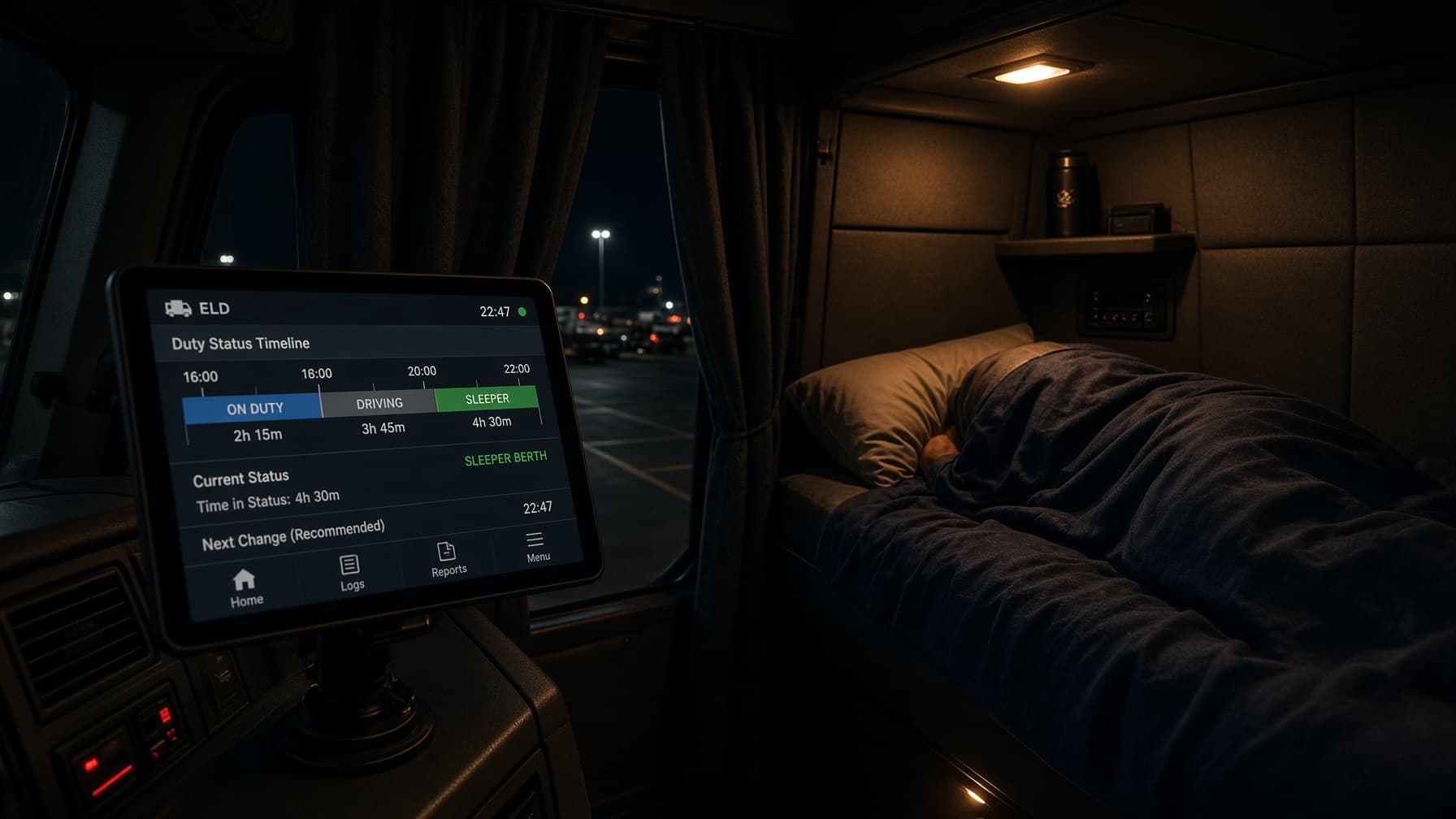
Drivers can split the 10 hours using the sleeper berth, but only in a 7/3 or 8/2 combination. The longer period must be at least 7 hours in the sleeper, and together they must total at least 10 hours.
Pilot 1: Split Duty Period
What it tests: letting a driver pause the 14-hour window for up to three hours a day.
The pause can be used for qualifying non-driving time:
- off duty,
- in the sleeper berth, or
- on duty at a pickup or delivery location.
That last one is the one drivers will care about. Today, three hours of detention at a shipper comes straight out of the day, and the driver can end up out of hours short of the destination. A pause would give that time back.
The pre-test ran from May 18 to July 17, 2026, with nine drivers from three carriers in Minnesota, Wisconsin and Ohio.
Pilot 2: Flexible Sleeper Berth
What it tests: splitting the 10-hour off-duty period in any combination totalling at least 10 hours, as long as one period includes at least five consecutive hours in the sleeper berth.
That opens up splits like 6/4 and 5/5, which the current rules don't allow.
The pre-test ran from April 1 to June 11, 2026, again with nine drivers from three carriers, this time in Ohio, Virginia and Wisconsin.
The 2027 expansion
| Pre-test (2026) | Full pilot (2027) | |
|---|---|---|
| Drivers | 9 per pilot | 256 per pilot, 512 total |
| Length | 6 weeks | 4 months |
| Driver pay | $600 | Up to $1,600 |
The pre-tests weren't about the safety results. They checked FMCSA's procedures, data collection and participation requirements before the larger run.
Should your fleet apply?
It could make sense if:
- your drivers lose a lot of time to detention, especially with regular customers where waits are predictable,
- your operation has irregular schedules where a 5/5 or 6/4 split would fit how drivers actually sleep,
- you have clean ELD data and a safety department that can handle the paperwork and data sharing a federal study involves.
Participating drivers get the pilot's rules only while enrolled. Everyone else in your fleet stays on the standard rules, so you'd need a clean way to tell dispatch who is who.
Carriers interested in participating can contact FMCSA through the pilot program pages on its website.
Why it matters to everyone else
The last big change to the hours of service rules, in 2020, is where the 7/3 split and the current 30-minute break rule came from. Pilot data is how FMCSA builds the case for the next change.
If the pause works and the data shows no safety cost, pressure to give every driver the same flexibility will be strong. Detention is also on the table in Congress: it's one of the trucking issues in the current highway reauthorization debate.
In the meantime, hours of service violations remain some of the most heavily weighted in your safety profile. See how to lower your CSA scores.
Quick answers
Can I pause my 14-hour clock now? Only if you're enrolled in FMCSA's Split Duty Period pilot. For everyone else, the 14-hour window still runs continuously.
Are 6/4 and 5/5 sleeper splits legal? Only for drivers in the Flexible Sleeper Berth pilot. The standard rules allow 7/3 and 8/2.
How many drivers will the 2027 pilots include? 512, with 256 in each program, for four months each.
Are pilot drivers paid? Yes, up to $1,600 each for the full 2027 pilots.