
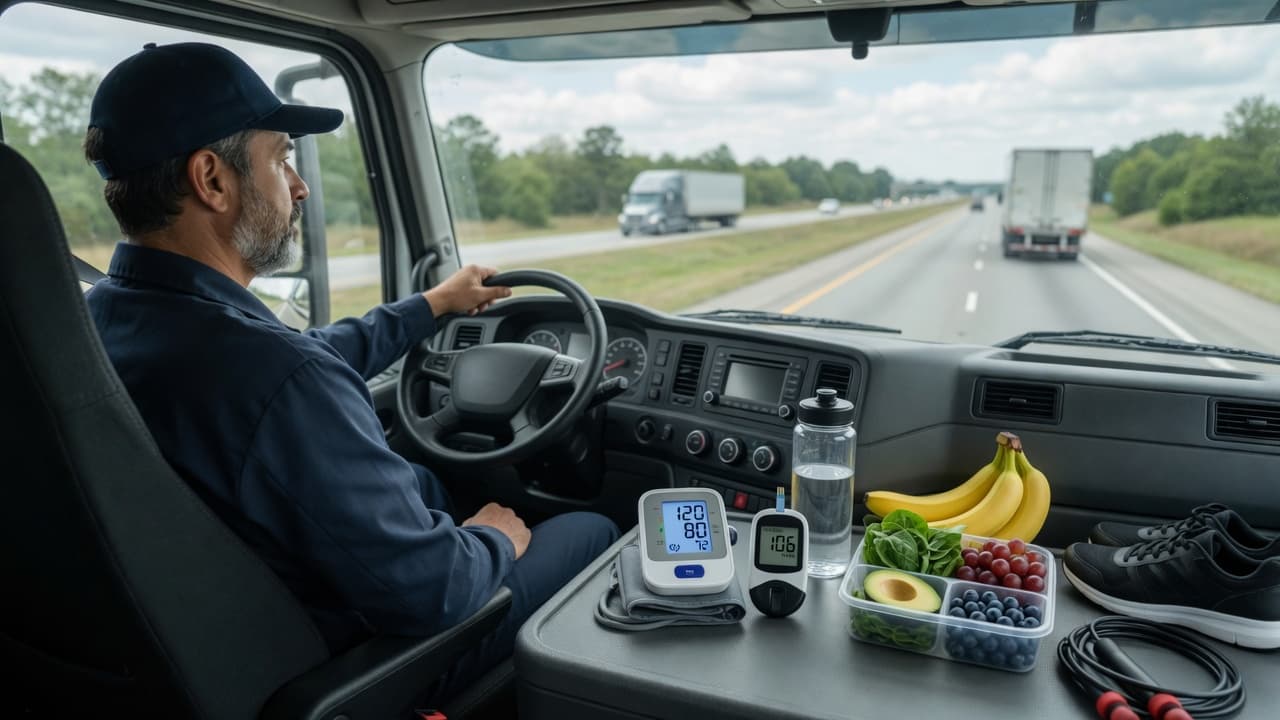
Ask a fleet owner what their most valuable asset is and they'll usually point at a truck. The real answer is the person driving it. A commercial driver spends long hours seated, eats on the road, sleeps on an irregular schedule, and carries the physical toll of the job for years — and that health directly affects whether they can drive safely and stay DOT-qualified.
The FMCSA publishes a short driver-health tip sheet for exactly this reason. Below is a practical, carrier-friendly version of that guidance — what your drivers can actually do from the cab, and why it belongs on a safety manager's radar, not just a wellness poster in the break room.
Why driver health is a safety and compliance issue
Two reasons this matters to the business, not just the driver:
- The DOT physical. Every CMV driver has to pass a medical exam by a certified examiner and carry a valid medical certificate. Uncontrolled blood pressure, unmanaged diabetes, or untreated sleep apnea can shorten that certificate — or cost a driver their card entirely. A healthier driver is a driver who stays qualified.
- Fatigue causes crashes. Drowsy driving is one of the behaviors law enforcement targets during initiatives like Operation Safe Driver Week, and it's a top contributor to serious truck accidents. Sleep and health aren't soft topics — they show up in your crash and violation data.
Know your numbers before you drive
FMCSA encourages drivers to stay aware of three numbers that quietly drive long-term risk:
- Blood pressure. High blood pressure increases the workload on the heart and blood vessels. Lower it with regular exercise, less salt, less alcohol, and more potassium-rich foods.
- Blood sugar. Chronically high blood sugar damages blood vessels over time, raising the risk of heart attack, stroke, and kidney and eye problems. Cardio, light lifting, and staying hydrated help keep it in range.
- Cholesterol. Too much cholesterol builds up in artery walls and narrows or blocks them. Physical activity and better nutrition help — swap saturated fats for unsaturated ones like the omega-3s found in fish.
Sleep and fatigue: the biggest safety lever
If a driver does nothing else on this list, this is the one that keeps them — and everyone around them — alive:
- Aim for 7–8 hours of sleep a night.
- Take a 15-minute power nap at a truck stop or rest area when fatigue starts to catch up.
- Stop driving if you're yawning repeatedly, your eyes are heavy, or your vision goes blurry. "Pushing through" is how fatigue crashes happen.
- Avoid heavy exercise within a few hours of bedtime — it can make it harder to fall asleep.
Eating healthy on the road
Truck-stop food is built for convenience, not arteries. A few habits go a long way:
- Go easy on salty food; load up on vegetables, fruit, and other high-fiber foods.
- Legumes — beans, peas, soybeans, and peanuts — help lower "bad" cholesterol.
- Reach for potassium-rich foods like bananas, avocado, and spinach.
- Keep a cooler of nutritious food in the cab so the healthy choice is the easy choice.
Exercise you can do from the cab
No gym required, and no excuse about space:
- Walking around a tractor-trailer 33 times is roughly a mile.
- A jump rope stores in a glovebox; 15 minutes a day is a real workout.
- Bodyweight moves — squats, lunges, and jumping jacks — need zero equipment. Build a short routine you'll actually repeat next to the cab.
Time your medications
One that's easy to overlook: check whether any prescription or over-the-counter medication you take causes drowsiness, and schedule it so it isn't hitting you behind the wheel. When in doubt, ask your pharmacist or your certified medical examiner.
Where a healthy driver meets a compliant fleet
Driver wellness is personal, but it lands on the carrier's books. A driver who lets their blood pressure or sleep apnea go unmanaged risks a shortened or failed DOT medical — and a lapsed medical certificate takes them out of service until it's fixed. That's a compliance gap and a staffing gap at the same time.
Two habits close most of that gap. Track every driver's medical-card expiration alongside their CDL and other credentials so a certificate never silently lapses, and pair it with a short fatigue-and-wellness refresher in your training program. That's how driver health stops being a poster on the wall and becomes part of how you keep the fleet both safe and audit-ready.
CMV driver health: quick answers
How much sleep should a CMV driver get? FMCSA recommends 7–8 hours a night, plus a 15-minute power nap at a rest area when fatigue sets in. Stop driving the moment you notice heavy eyes, repeated yawning, or blurry vision.
What health conditions can affect a driver's DOT medical certificate? Uncontrolled high blood pressure, unmanaged diabetes, heart conditions, and untreated sleep apnea are common reasons a certified medical examiner may shorten a certificate or require follow-up. Managing these proactively is the best way to stay qualified.
What are easy exercises for truck drivers? Walking laps around the trailer (about 33 laps to a mile), jumping rope, and bodyweight exercises like squats, lunges, and jumping jacks — all doable next to the cab with little or no equipment.
Is this medical advice? No. This is general wellness information adapted from FMCSA's driver-health guidance. For anything specific to your health or medications, talk to your doctor, pharmacist, or certified medical examiner.