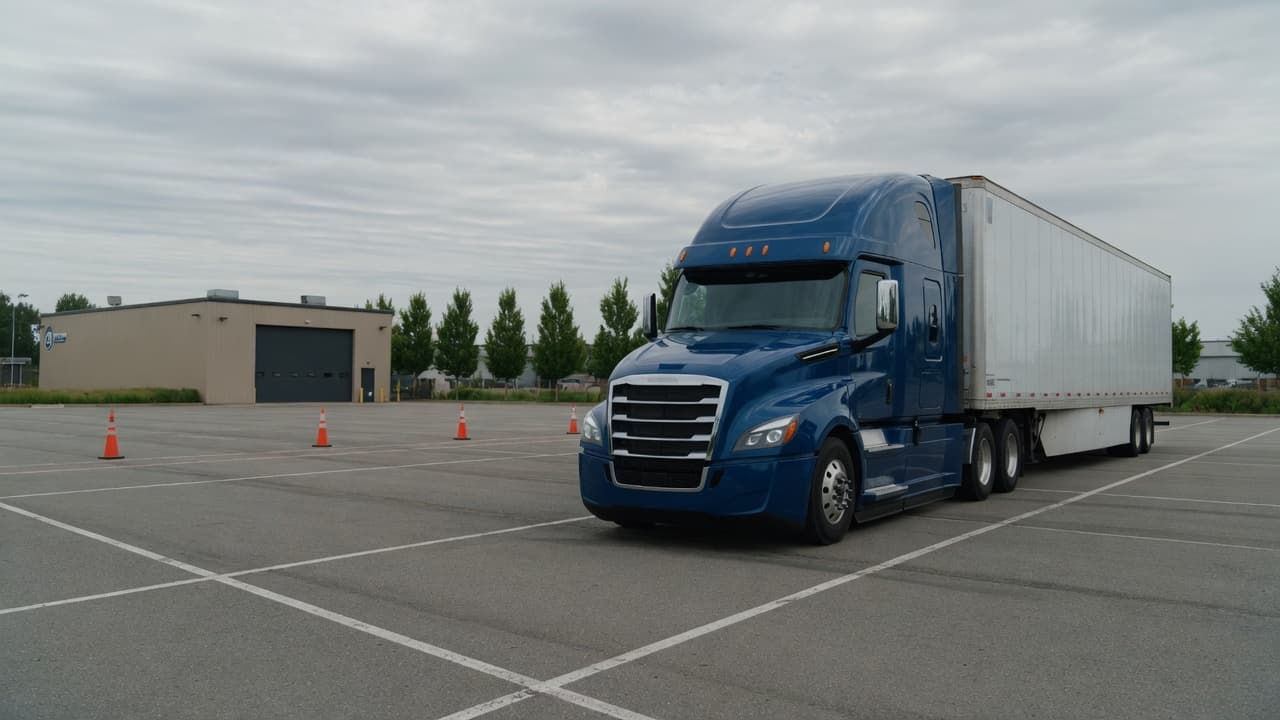
On July 16, 2026, the U.S. Department of Transportation announced a joint operation with the Department of Homeland Security to expand its crackdown on fraudulent and illegal practices in commercial driver's license (CDL) training schools. The Federal Motor Carrier Safety Administration (FMCSA) has identified approximately 75 entry-level driver training schools suspected of fraudulent activity — including using improper driver certifications, falsifying training records, and failing to properly train drivers applying for CDLs. DHS's Homeland Security Investigations (HSI) unit will now join those investigations.
For carriers, this isn't just Washington news. If any of your drivers came out of a school that ends up on that list, the paperwork behind their CDL — their training certificate, their qualification file, your hiring documentation — is exactly what investigators, insurers, and plaintiff's attorneys will ask to see.
What was announced
The operation pairs FMCSA's regulatory authority over the training industry with HSI's criminal-investigation muscle. In the announcement, Transportation Secretary Sean P. Duffy framed it as the next phase of a year-long enforcement push: "USDOT has spent the last year rooting out bad actors from our trucking industry," he said, pointing to over 24,000 drivers removed from the road for failing to meet English-proficiency requirements, over 28,000 licenses states were forced to cancel after being illegally issued to foreign drivers, and over 9,500 training schools purged from FMCSA's registry. "DHS will be a force multiplier of our efforts to clean up America's roads," Duffy said, adding that President Trump is "using every lever at his disposal to ensure the safety of American families."
DHS Secretary Markwayne Mullin called it "a whole of government approach" aimed at eliminating CDL fraud and strengthening the integrity of the CDL system, with DHS law enforcement investigating commercial driver's license schools throughout the country.
Why CDL schools are the target
Since the Entry-Level Driver Training (ELDT) rule took effect, every new CDL applicant must complete training from a provider listed on FMCSA's Training Provider Registry before taking the skills test. That registry is the chokepoint of the entire pipeline — which is exactly why fraud there is so serious. A school that falsifies training records or certifies drivers who never completed the curriculum doesn't just break a rule; it puts drivers on the road whose fundamental qualification is a fiction. Every carrier that later hires one of those drivers inherits that fiction in its own files.
What it means for your fleet
- Your drivers' training provenance can be questioned. If a school your driver trained at is flagged, expect scrutiny of that driver's certificate — and be ready to show you hired in good faith with a complete qualification file.
- Negligent-hiring exposure grows. A plaintiff's attorney will argue you should have verified the school. Documented verification at hiring time is your defense.
- Audits get sharper. With 9,500 schools already purged from the registry and criminal investigators now involved, DQF reviews — in audits and in litigation — will look harder at training records than ever.
- More enforcement is coming, not less. This is the third major enforcement wave in a year, after English-proficiency checks and non-domiciled license reviews. The direction of travel is clear.
Five things to do this week
- Verify training providers on the FMCSA registry for recent hires and any driver whose school you can't name from memory.
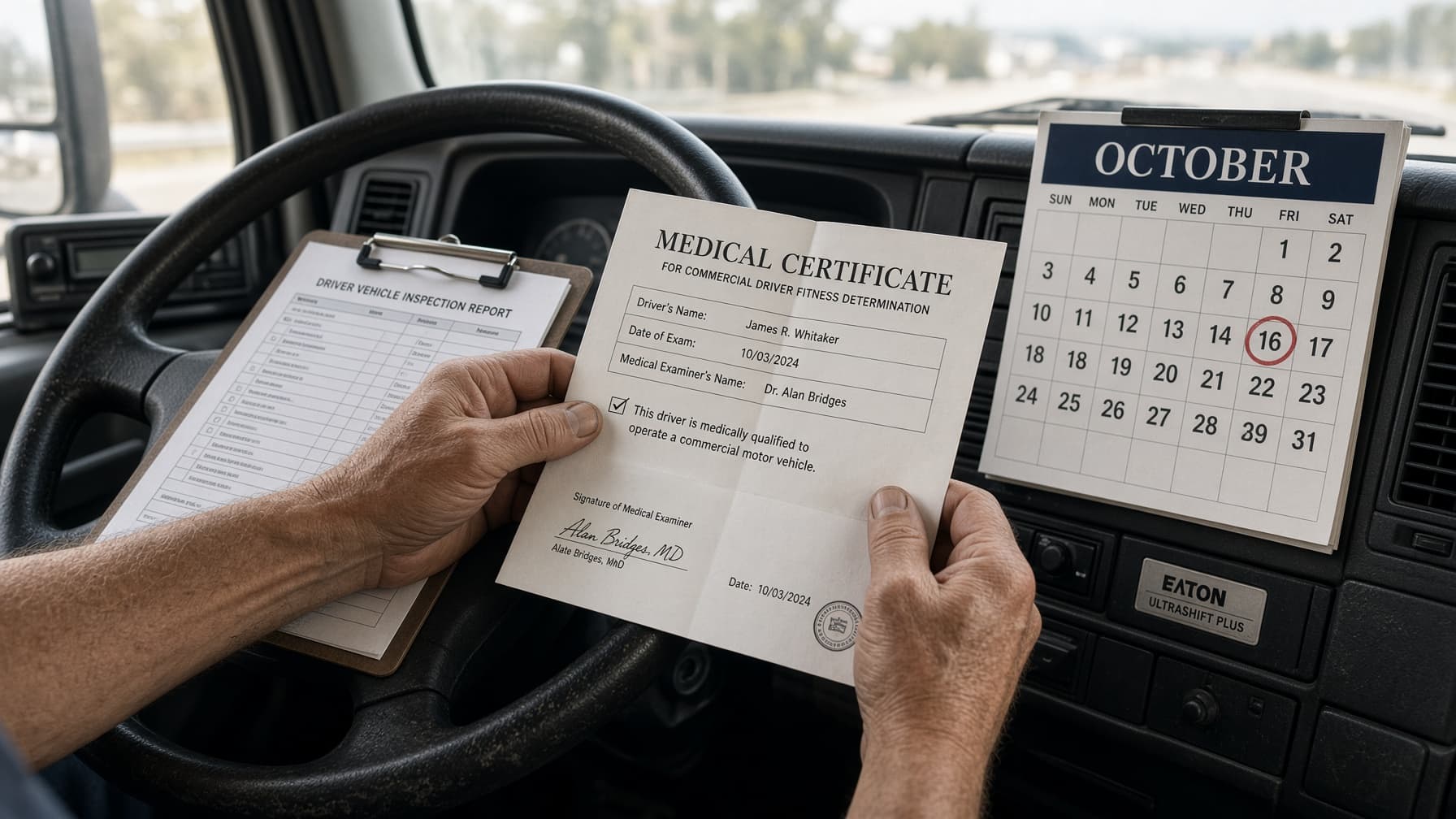
- Audit your driver qualification files. Every driver should have a complete DQF — application, previous-employer checks, MVR, medical certificate, road-test or CDL copy, and drug & alcohol records.
- Keep training certificates on file — not in a drawer at a terminal. If a school is flagged, you want your copy in seconds.
- Document English proficiency in line with current FMCSA enforcement — it's now one of the most common reasons drivers are placed out of service.
- Make your files producible. An auditor or attorney won't wait a week while you dig. If you can't produce a complete driver file today, that's the gap to close first.
Update, September 2026: the first removals land
The investigations described above have now produced action. On Aug. 31, 2026, FMCSA emergency-removed 111 entries from the Training Provider Registry across 20 states — led by Texas, Pennsylvania, California, Florida and Utah — plus online operations and providers whose locations were listed as inactive or unknown.
How they were chosen matters more than the number. FMCSA did not audit these schools one at a time. It compared Training Provider Registry records against roadside inspection records for drivers cited under the English language proficiency requirement. Every provider removed had trained at least 10 drivers later cited for those violations, and collectively they had certified more than 5,000 such drivers.
That is a data-matching exercise, and it is worth understanding as a method rather than a one-off: the agency connected two datasets it already held — who certified a driver, and which drivers later failed at roadside — and acted where they overlapped. Your drivers' training provenance is now discoverable retroactively, through data neither you nor the school controls.
A removed provider must immediately stop operating as a registered training provider: no delivering the curriculum, no behind-the-wheel instruction, no enrolling students, and no submitting certifications through the registry.
One distinction that most coverage blurs: these 111 emergency removals are separate from a further 160-plus providers that received notices of proposed removal. They are different lists at different stages, and adding them together overstates what has actually happened.
On the question this article left open — what happens if your driver trained at a flagged school — there is now a partial answer. Removal stops the provider from operating. It is not an automatic statement about any individual driver's credential. If you find an affected driver on your roster, get advice before acting on their employment, and evaluate the driver yourself on the things the registry cannot tell you.
Common questions
How many CDL schools are under investigation? FMCSA has identified approximately 75 entry-level driver training schools suspected of fraudulent activities, and DHS's Homeland Security Investigations is joining the investigations.
What kind of fraud is being investigated? Per USDOT's announcement: improper driver certifications, falsified training records, and failing to properly train drivers applying for CDLs, among other violations.
What happens if my driver trained at a flagged school? The announcement doesn't spell out driver-level consequences yet. The prudent move is to have that driver's full qualification file complete and producible, verify their training certificate, and document everything — so whatever comes next, your good-faith hiring is on paper.
How do I check if a CDL school is legitimate? Confirm the provider is listed on FMCSA's Training Provider Registry, and keep a record of that check in the driver's file.