
If you run a fleet, mark July 12–18, 2026 on the calendar. That's Operation Safe Driver Week — an annual, coordinated enforcement campaign run by the Commercial Vehicle Safety Alliance (CVSA), when law enforcement across the United States, Canada, and Mexico steps up roadside stops looking for the driving behaviors that cause crashes. Unlike a roadside inspection blitz that focuses on the truck, Safe Driver Week is about the person behind the wheel — both commercial drivers and the passenger-vehicle drivers around them.
It's easy to shrug off as "just another enforcement week." That's a mistake. A citation written during Safe Driver Week doesn't stay on the shoulder of the highway — it lands on your driver's record and flows straight into your company's CSA score, where it raises your insurance risk profile and hands a plaintiff's attorney a ready-made argument if that driver is ever in a crash.
When is Operation Safe Driver Week 2026?
Operation Safe Driver Week 2026 runs Sunday, July 12 through Saturday, July 18, 2026. During that window, participating officers throughout North America increase traffic enforcement and driver-focused interactions, issuing warnings and citations for unsafe driving. The campaign has run every summer for more than a decade, and it consistently produces thousands of stops in a single week.
This year's focus: reckless, careless, and dangerous driving
Each year CVSA highlights a specific area of emphasis. For 2026 — for the third year running — the focus is reckless, careless, or dangerous driving. That's the umbrella; underneath it, officers are watching for the specific behaviors that show up again and again in crash data:
- Speeding and driving too fast for conditions
- Distracted driving, including handheld phone use
- Following too closely
- Improper or unsafe lane changes
- Failure to wear a seat belt
- Fatigued or drowsy driving
- Impaired driving
- Disregarding traffic control signals and signs
Notice how many of these are habits, not one-off mistakes — which is exactly why a single enforcement week is a useful stress test of how your drivers actually behave when they think no one is watching.
Why one week of tickets matters all year
The reason Safe Driver Week deserves your attention isn't the week itself — it's the tail. Driver citations feed the FMCSA's Safety Measurement System, and unsafe-driving violations land in the Unsafe Driving BASIC, one of the most heavily weighted categories in your CSA score. A cluster of speeding or following-too-closely citations can push a carrier over an intervention threshold, invite more roadside inspections, raise premiums at renewal, and cost you freight with safety-conscious shippers.
And the litigation angle is worse. If a driver who was cited for reckless driving in July is involved in a crash months later, that citation becomes Exhibit A in a "negligent retention" argument — proof, a plaintiff's attorney will say, that you knew the driver was unsafe and kept them on the road anyway. What you do with a citation matters as much as the citation itself.
Five moves to make before July 12
1. Identify your highest-risk drivers now. You already know some of them. Look at accident history, violations, training status, and tenure together to surface the handful of drivers most likely to draw a citation this week — so you can coach them before an officer does.
2. Assign a short refresher on the focus behaviors. A five-minute module on speeding, following distance, distracted driving, and seat-belt use — assigned to every driver and completed on their phones — puts the emphasis areas top of mind exactly when it counts. Track who has finished it so you know who still needs the reminder.
3. Reinforce the pre-trip and the seat belt. The most common Safe Driver Week citations are also the most preventable. A quick reminder that seat belts are checked, phones stay down, and speed is watched costs nothing and prevents the violations that dent your score.
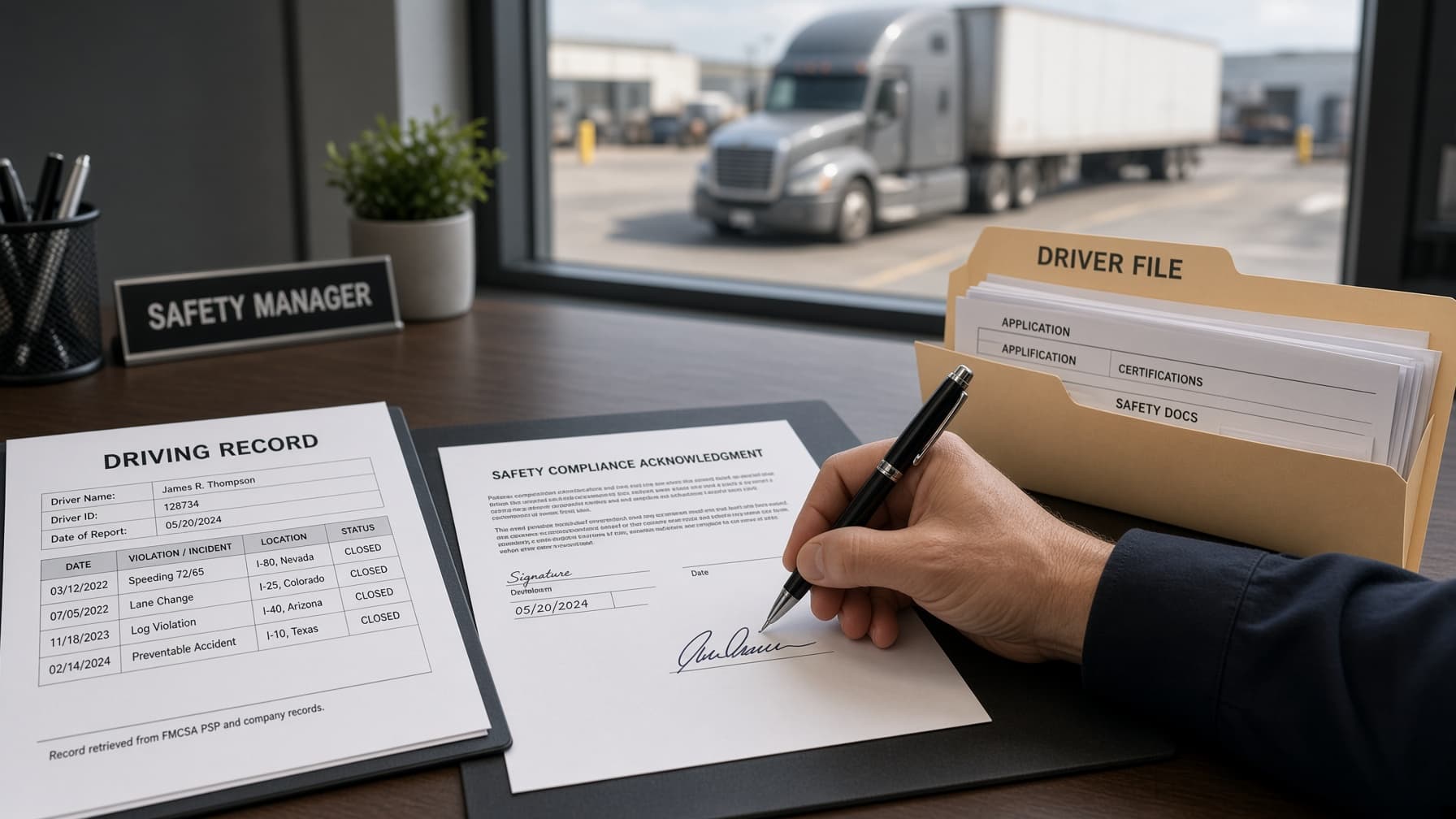
4. Document your coaching. If you talk to a driver about their habits, record it — ideally with a signed acknowledgment from the driver. The same conversation that improves behavior also proves, on paper, that you acted responsibly.
5. Have a plan for any citation that comes in. When a driver reports a stop, log it, attach the paperwork, and follow up with coaching or training — all tied to that driver's timestamped record. A citation you responded to is a very different story in court than one you ignored.
Turn an enforcement week into a safety win
The fleets that dread Safe Driver Week are the ones with no visibility into who their risky drivers are and no record of ever addressing it. The fleets that use it well treat it as a free, nationwide audit of their driver behavior — and a reason to tighten the habits that lower crashes, CSA scores, and premiums all year long.
Operation Safe Driver Week: quick answers
When is Operation Safe Driver Week 2026? July 12–18, 2026. It's an annual week-long enforcement campaign organized by CVSA across the U.S., Canada, and Mexico.
What is the focus of Safe Driver Week 2026? Reckless, careless, or dangerous driving, with officers watching for speeding, distracted driving, following too closely, unsafe lane changes, seat-belt violations, fatigued and impaired driving, and running traffic signals.
Do warnings and citations affect my CSA score? Citations for unsafe driving feed the FMCSA's Unsafe Driving BASIC and can raise your CSA score, trigger interventions, and increase insurance and litigation exposure — which is why how you respond to them matters.
How do I prepare my fleet for Operation Safe Driver Week? Identify high-risk drivers, assign a short refresher on the focus behaviors, reinforce seat-belt and phone rules, and document your coaching — so you reduce citations during the week and have a clean record if one comes in.